I Went Quiet. I Didn’t Run Out of Things to Say.
In short: After 15 years of silence, I'm back, because AI is the first truly exciting shift I've seen in a decade. Stoicism explains why I'm not afraid of it: technology changes, but human nature doesn't.
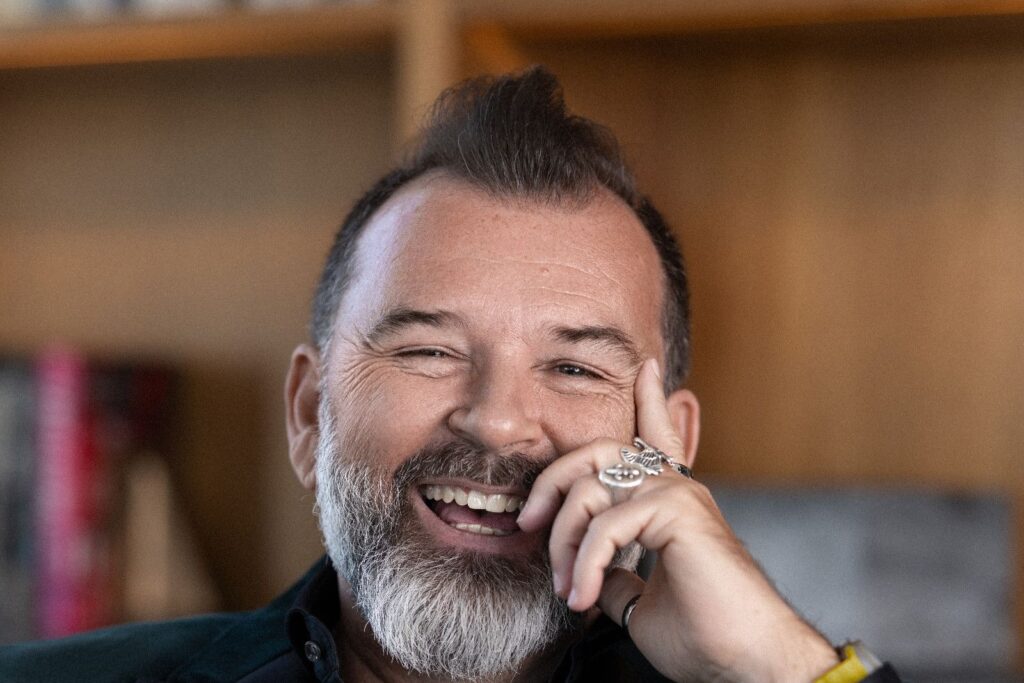
Read by Philippe, in his own voice, with a few detours.
It’s been about 15 years since I posted anything under my own name. Not for CESSON. Not for a client. For me.
People assume that when someone goes quiet, they ran out of things to say. That wasn’t it. I went quiet because I didn’t have to talk.
The business was doing well. I had ridden the wave of technology at the time, when social media was becoming dominant and search was turning into the industry we know today. I was one of the first five guests on the very first podcast of a major CEO organization, back when “podcast” meant a CD mailed to members.
And then, for years, nothing really new happened. The models matured. The algorithms took over. The work became refining what we already knew. Fine-tuning. Important, yes. But frankly? Boring. And when something is boring, I don’t feel the need to stand on a stage and talk about it.
That has changed.
Why AI got me talking again
AI is the most interesting development I’ve seen in my career. A lot of people are freaking out about it. I’m not.
And the reason I’m not has less to do with technology than with philosophy.
What Stoicism actually means (it’s not hiding your emotions)
I think I always had Stoicism in me, in how I behaved and how I handled things. But about four years ago I started studying it seriously.
Funny enough, it was during the same stretch when technology had become so predictable that I was looking for something deeper to sink my teeth into. Stoicism rooted me.
Let me clear something up first. Being “stoic” in the everyday sense means showing no emotion. That’s not Stoicism. Stoicism is a practical philosophy about how to live, the one Seneca, Epictetus and Marcus Aurelius practiced. You feel what you feel. Then you separate what you control from what you don’t, and you put your energy into the first.
It rests on four virtues: wisdom, courage, justice and temperance. Live by them and you move toward what the Greeks called eudaimonia. Not happiness in the passing sense. A life in balance. A life well lived.
Here’s what it taught me that matters right now.
The tools change. People don’t.
Every era panics about new technology
For years, when I spoke about the generational divide, often to audiences of baby boomers, I’d remind them that they were once the rebels. The older generation looked at them and said: this is the end of America as we know it. These kids will never win the Cold War.
Today the fear sounds different, but it’s the same fear. Talk to young people now and you hear that they don’t see a future. A house feels out of reach. Everything costs too much. And now they’re told AI is coming for the entry-level jobs they were counting on.
That anxiety is real, and I don’t dismiss it. But the boomers lived with the draft, nuclear drills and stagflation, and they built lives anyway. Not because the world got easier, but because the ones who did well focused on what they could control. That’s not a generational lesson. It’s a human one.
And the pattern goes back much further. In Plato’s Phaedrus, Socrates warns about a dangerous new technology that will weaken people’s memory and make them only appear wise, without real understanding.
That technology was writing.
Swap that one word for AI, and you could publish the same warning today, 2,400 years later. Nobody would blink.
What AI won’t change about being human
We live with constant connectivity, constant interaction, constant progress. So we convince ourselves that we are different. Different from a few years ago. Different from our parents. Certainly different from people in ancient Athens or Rome.
We’re not.
The process of being human hasn’t changed. Aging hasn’t changed. Fear hasn’t changed. And the work of building a more fulfilled life, of deciding what you control and what you don’t, of choosing how you respond, has not changed one bit.
That’s the heart of Stoicism. And that’s why I think it’s the perfect lens for this moment. AI will change how we work. It will change what we produce and how fast. It will not change what makes us human, unless we let fear make that decision for us.
So, I’m back
This is step one. I’m going to write here about what I’m seeing, what I’m studying, and what I think it means, for business, for technology, and for us as people.
It’s also the idea CESSON was built on. It was born in a California garage in 2005, long before Miami, and I set it up to be the agency clients stay with because it tells them the truth about which shifts to act on and which to skip. Over 20 years later, some of our clients have been with us more than ten years. The longest is at 17 and counting. You don’t keep clients that long by chasing every fad. You keep them by putting the effort where it moves their business, which is the Stoic split between what you control and what you don’t, applied to marketing.
It’s what I bring on stage too. My three talks point the same lens at three questions every CEO is asking. Where will my next customers come from? That’s Grow Where They’re Looking. Why can’t my younger buyers, employees and successors see me? That’s Generational Invisibility. What in the next three years can I safely ignore, and what should I brace for? That’s Twenty Years of Not Falling for It.
So here is what you can expect from me. We are living through the most profound shift of our working lives, and none of us has done it before. I’m not going to pretend I have. What I can do is what I’ve done for over 20 years: digest it, stay a few steps ahead, and tell you what’s reasonable for your business, and now and then for the rest of your life, because the same shift shows up at the dinner table.
Growth will be the thread, because that’s the question every CEO is really asking. Earlier this year CESSON changed its tagline to we make marketing and AI click, and this is where I explain what that means.
If you run a company, you’ll get a straight answer to a question you’re already asking, in plain words. If you run the marketing, you’ll get the mechanism behind it: what to change, in what order, and what to tell your boss when the question comes.
I went quiet because there was nothing worth saying.
Now there is.
— Philippe
About the author: Philippe is the founder of CESSON, a Miami digital marketing agency he has run for over 20 years, and a keynote speaker known as the Badass Speaker. He studies Stoic philosophy and writes about business, technology and what doesn’t change about people.